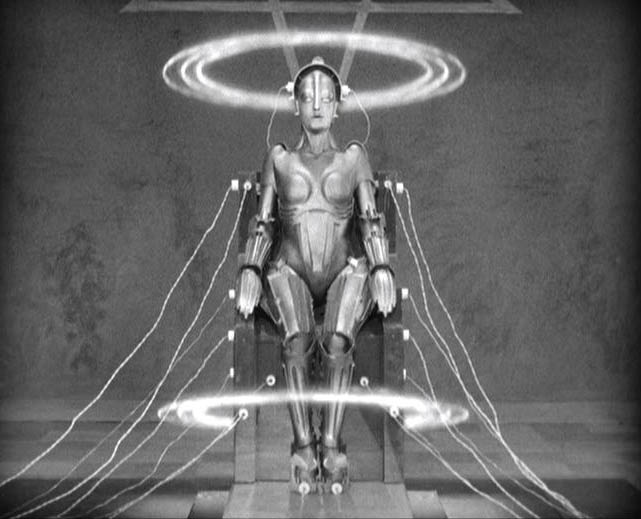
Casablanca
by Thomas M. Disch
In the morning the man with the red fez always brought them coffee and toast on a tray. He would ask them how it goes, and Mrs. Richmond, who had some French, would say it goes well. The hotel always served the same kind of jam, plum jam. That eventually became so tiresome that Mrs. Richmond went out and bought their own jar of strawberry jam, but in a little while that was just as tiresome as the plum jam. Then they alternated, having plum jam one day, and strawberry jam the next. They wouldn't have taken their breakfasts in the hotel at all, except for the money it saved.
When, on the morning of their second Wednesday at the Belmonte, they came down to the lobby, there was no mail for them at the desk. "You can't really expect them to think of us here," Mrs. Richmond said in a piqued tone, for it had been her expectation.
"I suppose not," Fred agreed.
"I think I'm sick again. It was that funny stew we had last night. Didn't I tell you? Why don't you go out and get the newspaper this morning?"
So Fred went, by himself, to the newsstand on the corner. It had neither the Times nor the Tribune. There weren't even the usual papers from London. Fred went to the magazine store nearby the Marhaba, the big luxury hotel. On the way someone tried to sell him a gold watch. It seemed to Fred that everyone in Morocco was trying to sell gold watches.
The magazine store still had copies of the Times from last week. Fred had read those papers already. "Where is today's Times?" he asked loudly, in English.
The middle-aged man behind the counter shook his head sadly, either because he didn't understand Fred's question or because he didn't know the answer. He asked Fred how it goes.
"Byen," said Fred, without conviction, "byen."
The local French newspaper, La Vigie Marocaine, had black, portentous headlines, which Fred could not decipher. Fred spoke "four languages: English, Irish, Scottish, and American." With only those languages, he insisted, one could be understood anywhere in the free world.
At ten o'clock, Bulova watch time, Fred found himself, as though by chance, outside his favorite ice-cream parlor. Usually, when he was with his wife, he wasn't able to indulge his sweet tooth, because Mrs. Richmond, who had a delicate stomach, distrusted Moroccan dairy products, unless boiled.
The waiter smiled and said, "Good morning, Mister Richmon." Foreigners were never able to pronounce his name right for some reason.
Fred said, "Good morning."
"How are you?"
"I'm just fine, thank you."
"Good, good," the waiter said. Nevertheless, he looked saddened. He seemed to want to say something to Fred, but his English was very limited.
It was amazing, to Fred, that he had had to come halfway around the world to discover the best damned ice-cream sundaes he'd ever tasted. Instead of going to bars, the young men of the town went to ice-cream parlors, like this, just as they had in Fred's youth, in Iowa, during Prohibition. It had something to do, here in Casablanca, with the Moslem religion.
A ragged shoeshine boy came in and asked to shine Fred's shoes, which were very well shined already. Fred looked out the plate-glass window to the travel agency across the street. The boy hissed monsieur, monsieur, until Fred would have been happy to kick him. The wisest policy was to ignore the beggars. They went away quicker if you just didn't look at them. The travel agency displayed a poster showing a pretty young blonde, rather like Doris Day, in a cowboy costume. It was a poster for Pan American airlines.
At last the shoeshine boy went away. Fred's face was flushed with stifled anger. His sparse white hair made the redness of the flesh seem all the brighter, like a winter sunset.
A grown man came into the ice-cream parlor with a bundle of newspapers, French newspapers. Despite his lack of French, Fred could understand the headlines. He bought a copy for twenty francs and went back to the hotel, leaving half the sundae uneaten.
The minute he was in the door, Mrs. Richmond cried out, "Isn't it terrible?" She had a copy of the paper already spread out on the bed. "It doesn't say anything about Cleveland."
Cleveland was where Nan, the Richmonds' married daughter, lived. There was no point in wondering about their own home. It was in Florida, within fifty miles of the Cape, and they'd always known that if there were a war it would be one of the first places to go.
"The dirty reds!" Fred said, flushing. His wife began to cry. "Goddamn them to hell. What did the newspaper say? How did it start?"
"Do you suppose," Mrs. Richmond asked, "that Billy and Midge could be at Grandma Holt's farm?"
Fred paged through La Vigie Marocaine helplessly, looking for pictures. Except for the big cutout of a mushroom cloud on the front page and a stock picture on the second of the president in a cowboy hat, there were no photos. He tried to read the lead story but it made no sense.
Mrs. Richmond rushed out of the room, crying aloud.
Fred wanted to tear the paper into ribbons. To calm himself he poured a shot from the pint of bourbon he kept in the dresser. Then he went out into the hall and called through the locked door to the W.C.: "Well, I'll bet we knocked hell out of them at least."
This was of no comfort to Mrs. Richmond.
• • • • •
Only the day before, Mrs. Richmond had written two letters—one to her granddaughter Midge, the other to Midge's mother, Nan. The letter to Midge read:
December 2
Dear Mademoiselle Holt,
Well, here we are in romantic Casablanca, where the old and the new come together. There are palm trees growing on the boulevard outside our hotel window and sometimes it seems that we never left Florida at all. In Marrakesh we bought presents for you and Billy, which you should get in time for Christmas if the mails are good. Wouldn't you like to know what's in those packages! But you'll just have to wait till Christmas! You should thank God every day, darling, that you live in America. If you could only see the poor Moroccan children, begging on the streets. They aren't able to go to school, and many of them don't even have shoes or warm clothes. And don't think it doesn't get cold here, even if it is Africa! You and Billy don't know how lucky you are!
On the train ride to Marrakesh we saw the farmers plowing their fields in December. Each plow has one donkey and one camel. That would probably be an interesting fact for you to tell your geography teacher in school.
Casablanca is wonderfully exciting, and I often wish that you and Billy were here to enjoy it with us. Someday, perhaps! Be good—remember it will be Christmas soon.
Your loving Grandmother,
"Grams"
The second letter, to Midge's mother, read as follows:
December 2. Mond. Afternoon
Dear Nan,
There's no use pretending any more with you! You saw it in my first letter—before I even knew my own feelings. Yes, Morocco has been a terrible disappointment. You wouldn't believe some of the things that have happened. For instance, it is almost impossible to mail a package out of this country! I will have to wait till we get to Spain, therefore, to send Billy and Midge their Xmas presents. Better not tell B & M that, however!
Marrakesh was terrible. Fred and I got lost in the native quarter, and we thought we'd never escape! The filth is unbelievable, but if I talk about that it will only make me ill. After our experience on "the wrong side of the tracks," I wouldn't leave our hotel. Fred got very angry, and we took the train back to Casablanca the same night. At least there are decent restaurants in Casablanca. You can get a very satisfactory French-type dinner for about $1.00.
After all this you won't believe me when I tell you that we're going to stay here two more weeks. That's when the next boat leaves for Spain. Two more weeks!!! Fred says, take an airplane, but you know me. And I'll be d——ed if I'll take a trip on the local railroad with all our luggage, which is the only other way.
I've finished the one book I brought along, and now I have nothing to read but newspapers. They are printed up in Paris and have mostly the news from India and Angola, which I find too depressing, and the political news from Europe, which I can't ever keep up with. Who is Chancellor Zucker and what does he have to do with the war in India? I say, if people would just sit down and try to understand each other, most of the world's so-called problems would disappear. Well, that's my opinion, but I have to keep it to myself, or Fred gets an apoplexy. You know Fred! He says, drop a bomb on Red China and to H—— with it! Good old Fred!
I hope you and Dan are both fine and dan-dy, and I hope B & M are coming along in school. We were both excited to hear about Billy's A in geography. Fred says it's due to all the stories he's told Billy about our travels. Maybe he's right for once!
Love and kisses,
"Grams"
Fred had forgotten to mail these two letters yesterday afternoon, and now, after the news in the paper, it didn't seem worthwhile. The Holts, Nan and Dan and Billy and Midge, were all very probably dead.
"It's so strange," Mrs. Richmond observed at lunch at their restaurant. "I can't believe it really happened. Nothing has changed here. You'd think it would make more of a difference."
"Goddamned reds."
"Will you drink the rest of my wine? I'm too upset."
"What do you suppose we should do? Should we try and telephone to Nan?"
"Trans-Atlantic? Wouldn't a telegram do just as well?"
So, after lunch, they went to the telegraph office, which was in the main post office, and filled out a form. The message they finally agreed on was: IS EVERYONE WELL QUESTION WAS CLEVELAND HIT QUESTION RETURN REPLY REQUESTED. It cost eleven dollars to send off, one dollar a word. The post office wouldn't accept a traveler's check, so while Mrs. Richmond waited at the desk, Fred went across the street to the Bank of Morocco to cash it there.
The teller behind the grille looked at Fred's check doubtfully and asked to see his passport. He brought check and passport into an office at the back of the bank. Fred grew more and more peeved as the time wore on and nothing was done. He was accustomed to being treated with respect, at least. The teller returned with a portly gentleman not much younger than Fred himself. He wore a striped suit with a flower in his buttonhole.
"Are you Mr. Richmon?" the older gentleman asked.
"Of course I am. Look at the picture in my passport."
"I'm sorry, Mr. Richmon, but we are not able to cash this check."
"What do you mean? I've cashed checks here before. Look, I've noted it down: on November 28, forty dollars; on December 1, twenty dollars."
The man shook his head. "I'm sorry, Mr. Richmon, but we are not able to cash these checks."
"I'd like to see the manager."
"I'm sorry, Mr. Richmon, it is not possible for us to cash your checks. Thank you very much." He turned to go.
"I want to see the manager!" Everybody in the bank, the tellers and the other clients, was staring at Fred, who had turned quite red.
"I am the manager," said the man in the striped suit. "Good-bye, Mr. Richmon."
"These are American Express Travelers' Checks. They're good anywhere in the world!"
The manager returned to his office, and the teller began to wait on another customer. Fred returned to the post office.
"We'll have to return here later, darling," he explained to his wife. She didn't ask why, and he didn't want to tell her.
They bought food to bring back to the hotel, since Mrs. Richmond didn't feel up to dressing for dinner.
The manager of the hotel, a thin, nervous man who wore wire-framed spectacles, was waiting at the desk to see them. Wordlessly he presented them a bill for the room.
Fred protested angrily. "We're paid up. We're paid until the twelfth of this month. What are you trying to pull?"
The manager smiled. He had gold teeth. He explained, in imperfect English, that this was the bill.
"Nous sommes payée," Mrs. Richmond explained pleasantly. Then, in a diplomatic whisper to her husband, "Show him the receipt."
The manager examined the receipt. "Non, non, non," he said, shaking his head. He handed Fred, instead of his receipt, the new bill.
"I'll take that receipt back, thank you very much." The manager smiled and backed away from Fred. Fred acted without thinking. He grabbed the manager's wrist and pried the receipt out of his fingers. The manager shouted words at him in Arabic. Fred took the key for their room, 216, off its hook behind the desk. Then he took his wife by the elbow and led her up the stairs. The man with the red fez came running down the stairs to do the manager's bidding.
Once they were inside the room, Fred locked the door. He was trembling and short of breath. Mrs. Richmond made him sit down and sponged his fevered brow with cold water. Five minutes later, a little slip of paper slid in under the door. It was the bill.
"Look at this!" he exclaimed. "Forty dirham a day. Eight dollars! That son of a bitch." The regular per diem rate for the room was twenty dirham, and the Richmonds, by taking it for a fortnight, had bargained it down to fifteen.
"Now, Freddy!"
"That bastard!"
"It's probably some sort of misunderstanding."
"He saw that receipt, didn't he? He made out that receipt himself. You know why he's doing it. Because of what's happened. Now I won't be able to cash my travelers' checks here either. That son of a bitch!"
"Now, Freddy." She smoothed the ruffled strands of white hair with a wet sponge.
"Don't you now-Freddy me! I know what I'm going to do. I'm going to the American Consulate and register a complaint."
"That's a good idea, but not today, Freddy. Let's stay inside until tomorrow. We're both too tired and upset. Tomorrow we can go there together. Maybe they'll know something about Cleveland by then." Mrs. Richmond was prevented from giving further council by a new onset of her illness. She went out into the hall, but returned almost immediately. "The door into the toilet is padlocked," she said. Her eyes were wide with terror. She had just begun to understand what was happening.
• • • • •
That night, after a frugal dinner of olives, cheese sandwiches, and figs, Mrs. Richmond tried to look on the bright side. "Actually we're very lucky," she said, "to be here, instead of there, when it happened. At least we're alive. We should thank God for being alive."
"If we'd of bombed them twenty years ago, we wouldn't be in this spot now. Didn't I say way back then that we should have bombed them?"
"Yes, darling. But there's no use crying over spilt milk. Try and look on the bright side, like I do."
"Goddamn dirty reds."
The bourbon was all gone. It was dark, and outside, across the square, a billboard advertising Olympic Bleue cigarettes (C'est mieux!) winked on and off, as it had on all other nights of their visit to Casablanca. Nothing here seemed to have been affected by the momentous events across the ocean.
"We're out of envelopes," Mrs. Richmond complained. She had been trying to compose a letter to her daughter.
Fred was staring out the window, wondering what it had been like: had the sky been filled with planes? Were they still fighting on the ground in India and Angola? What did Florida look like now? He had always wanted to build a bomb shelter in their backyard in Florida, but his wife had been against it. Now it would be impossible to know which of them had been right.
"What time is it?" Mrs. Richmond asked, winding the alarm.
He looked at his watch, which was always right. "Eleven o'clock, Bulova watch time." It was an Accutron that his company, Iowa Mutual Life, had presented to him at retirement.
There was, in the direction of the waterfront, a din of shouting and clashing metal. As it grew louder, Fred could see the head of a ragged parade advancing up the boulevard. He pulled down the lath shutters over the windows till there was just a narrow slit to watch the parade through.
"They're burning something," he informed his wife. "Come see."
"I don't want to watch that sort of thing."
"Some kind of statue, or scarecrow. You can't tell who it's meant to be. Someone in a cowboy hat, looks like. I'll bet they're Commies."
When the mob of demonstrators reached the square over which the Belmonte Hotel looked, they turned to the left, toward the larger luxury hotels, the Marhaba and El Mansour. They were banging cymbals together and beating drums and blowing on loud horns that sounded like bagpipes. Instead of marching in rows, they did a sort of whirling, skipping dance step. Once they'd turned the corner, Fred couldn't see any more of them.
"I'll bet every beggar in town is out there, blowing his horn," Fred said sourly. "Every goddamn watch peddler and shoeshine boy in Casablanca."
"They sound very happy," Mrs. Richmond said. Then she began crying again.
The Richmonds slept together in the same bed that evening for the first time in several months. The noise of the demonstration continued, off and on, nearer or farther away, for several hours. This too set the evening apart from other evenings, for Casablanca was usually very quiet, surprisingly so, after ten o'clock at night.
• • • • •
The office of the American Consul seemed to have been bombed. The front door was broken off its hinges, and Fred entered, after some reluctance, to find all the downstairs rooms empty of furniture, the carpets torn away, the moldings pried from the walls. The files of the consulate had been emptied out and the contents burned in the center of the largest room.
Slogans in Arabic had been scrawled on the walls with the ashes.
Leaving the building, he discovered a piece of typing paper nailed to the deranged door. It read: "All Americans in Morocco, whether of tourist or resident status, are advised to leave the country until the present crisis is over. The Consul cannot guarantee the safety of those who choose to remain."
A shoeshine boy, his diseased scalp inadequately concealed by a dirty wool cap, tried to slip his box under Fred's foot.
"Go away, you! Vamoose! This is your fault. I know what happened last night. You and your kind did this. Red beggars!"
The boy smiled uncertainly at Fred and tried again to get his shoe on the box. "Monsieur, monsieur," he hissed—or, perhaps, "Merci, merci."
By noonday the center of the town was aswarm with Americans. Fred hadn't realized there had been so many in Casablanca. What were they doing here? Where had they kept themselves hidden? Most of the Americans were on their way to the airport, their cars piled high with luggage. Some said they were bound for England, others for Germany. Spain, they claimed, wouldn't be safe, though it was probably safer than Morocco. They were brusque with Fred to the point of rudeness.
He returned to the hotel room, where Mrs. Richmond was waiting for him. They had agreed that one of them must always be in the room. As Fred went up the stairs the manager tried to hand him another bill. "I will call the police," he threatened. Fred was too angry to reply. He wanted to hit the man in the nose and stamp on his ridiculous spectacles. If he'd been five years younger he might have done so.
"They've cut off the water," Mrs. Richmond announced dramatically after she'd admitted her husband to the room. "And the man with the red hat tried to get in, but I had the chain across the door, thank heaven. We can't wash or use the bidet. I don't know what will happen. I'm afraid."
She wouldn't listen to anything Fred said about the Consulate. "We've got to take a plane," he insisted. "To England. All the other Americans are going there. There was a sign on the door of the Con—"
"No, Fred. No, not a plane. You won't make me get into an airplane. I've gone twenty years without that, and I won't start now."
"But this is an emergency. We have to. Darling, be reasonable."
"I refuse to talk about it. And don't you shout at me, Fred Richmond. We'll sail when the boat sails, and that's that! Now, let's be practical, shall we? The first thing that we have to do is for you to go out and buy some bottled water. Four bottles, and bread, and … No, you'll never remember everything. I'll write out a list."
But when Fred returned, four hours later, when it was growing dark, he had but a single bottle of soda, one loaf of hard bread, and a little box of pasteurized process cheese.
"It was all the money I had. They won't cash my checks. Not at the bank, not at the Marhaba, not anywhere." There were flecks of violet in his red, dirty face, and his voice was hoarse. He had been shouting hours long.
Mrs. Richmond used half the bottle of soda to wash off his face. Then she made sandwiches of cheese and strawberry jam, all the while maintaining a steady stream of conversation on cheerful topics. She was afraid her husband would have a stroke.
On Thursday the twelfth, the day before their scheduled sailing, Fred went to the travel agency to find out what pier their ship had docked in. He was informed that the sailing had been canceled permanently. The ship, a Yugoslav freighter, had been in Norfolk on December 4. The agency politely refunded the price of the tickets—in American dollars.
"Couldn't you give me dirham instead?"
"But you paid in dollars, Mr. Richmond." The agent spoke with a fussy, overprecise accent that annoyed Fred more than an honest French accent. "You paid in American Express Travelers' checks."
"But I'd rather have dirham."
"That would be impossible."
"I'll give you one to one. How about that? One dirham for one dollar." He did not even become angry at being forced to make so unfair a suggestion. He had been through this same scene too many times—at banks, at stores, with people off the street.
"The government has forbidden us to trade in American money, Mr. Richmond. I am truly sorry that I cannot help you. If you would be interested to purchase an airplane ticket, however, I can accept money for that. If you have enough."
"You don't leave much choice, do you?" (He thought: She will be furious.) "What will it cost for two tickets to London?"
The agent named a price. Fred flared up. "That's highway robbery. Why, that's more than the first-class to New York City!"
The agent smiled. "We have no flights scheduled to New York, sir."
Grimly, Fred signed away his travelers' checks to pay for the tickets. It took all his checks and all but fifty dollars of the refunded money. His wife, however, had her own bundle of American Express checks that hadn't even been touched yet. He examined the tickets, which were printed in French. "What does this say here? When does it leave?"
"On the fourteenth. Saturday. At eight in the evening."
"You don't have anything tomorrow?"
"I'm sorry. You should be quite happy that we can sell you these tickets. If it weren't for the fact that our main office is in Paris, and that they've directed that Americans be given priority on all Pan Am flights, we wouldn't be able to."
"I see. The thing is this—I'm in rather a tight spot. Nobody, not even the banks, will take American money. This is our last night at the hotel, and if we have to stay over Friday night as well.…"
"You might go to the airport waiting room, sir."
Fred took off his Accutron wrist watch. "In America this watch would cost $120 wholesale. You wouldn't be interested.…"
"I'm sorry, Mr. Richmond. I have a watch of my own."
Fred, with the tickets securely tucked into his passport case, went out through the thick glass door. He would have liked to have a sundae at the ice-cream parlor across the street, but he couldn't afford it. He couldn't afford anything unless he was able to sell his watch. They had lived the last week out of what he'd got for the alarm clock and the electric shaver. Now there was nothing left.
When Fred was at the corner, he heard someone calling his name. "Mr. Richmond. Mr. Richmond, sir." It was the agent. Shyly he held out a ten dirham note and three fives. Fred took the money and handed him the watch. The agent put Fred's Accutron on his wrist beside his old watch. He smiled and offered Fred his hand to shake. Fred walked away, ignoring the outstretched hand.
Five dollars, he thought over and over again, five dollars. He was too ashamed to return at once to the hotel.
• • • • •
Mrs. Richmond wasn't in the room. Instead, the man in the red fez was engaged in packing all their clothes and toilet articles into the three suitcases. "Hey!" Fred shouted. "What do you think you're doing? Stop that!"
"You must pay your bill," the hotel manager, who stood back at a safe distance in the hallway, shrilled at him. "You must pay your bill or leave."
Fred tried to prevent the man in the red fez from packing the bags. He was furious with his wife for having gone off—to the W.C. probably—and left the hotel room unguarded.
"Where is my wife?" he demanded of the manager. "This is an outrage." He began to swear. The man in the red fez returned to packing the bags.
Fred made a determined effort to calm himself. He could not risk a stroke. After all, he reasoned with himself, whether they spent one or two nights in the airport waiting room wouldn't make that much difference. So he chased the man in the red fez away and finished the packing himself. When he was done, he rang for the porter, and the man in the red fez returned and helped him carry the bags downstairs. He waited in the dark lobby for his wife to return, using the largest of the suitcases for a stool. She had probably gone to "their" restaurant, some blocks away, where they were still allowed to use the W.C. The owner of the restaurant couldn't understand why they didn't take their meals there any more and didn't want to offend them, hoping, perhaps, that they would come back.
While he waited, Fred occupied the time by trying to remember the name of the Englishman who had been a supper guest at their house in Florida three years before. It was a strange name that was not pronounced at all the way that it was spelled. At intervals he would go out into the street to try and catch a sight of his wife returning to the hotel. Whenever he tried to ask the manager where she had gone, the man would renew his shrill complaint. Fred became desperate. She was taking altogether too long. He telephoned the restaurant. The owner of the restaurant understood enough English to be able to tell him that she had not visited his W.C. all that day.
An hour or so after sunset, Fred found his way to the police station, a wretched stucco building inside the ancient medina, the non-European quarter. Americans were advised not to venture into the medina after dark.
"My wife is missing," he told one of the gray-uniformed men. "I think she may be the victim of a robbery."
The policeman replied brusquely in French.
"My wife," Fred repeated loudly, gesturing in a vague way.
The policeman turned to speak to his fellows. It was a piece of deliberate rudeness.
Fred took out his passport and waved it in the policeman's face. "This is my passport," he shouted. "My wife is missing. Doesn't somebody here speak English? Somebody must speak English. Ing-lish!"
The policeman shrugged and handed Fred back his passport.
"My wife!" Fred screamed hysterically. "Listen to me—my wife, my wife, my wife!"
The policeman, a scrawny, mustached man, grabbed Fred by the neck of his coat and led him forcibly into another room and down a long, unlighted corridor that smelled of urine. Fred didn't realize, until he had been thrust into the room, that it was a cell. The door that closed behind him was made not of bars, but of sheet metal nailed over wood. There was no light in the room, no air. He screamed, he kicked at the door and pounded on it with his fists until he had cut a deep gash into the side of his palm. He stopped to suck the blood, fearful of blood poisoning.
He could, when his eyes had adjusted to the darkness, see a little of the room about him. It was not much larger than Room 216 at the Belmonte, but it contained more people than Fred could count. They were heaped all along the walls, an indiscriminate tumble of rags and filth, old men and young men, a wretched assembly.
They stared at the American gentleman in astonishment.
• • • • •
The police released Fred in the morning, and he returned at once to the hotel, speaking to no one. He was angry, but, even more, he was terrified.
His wife had not returned. The three suitcases, for a wonder, were still sitting where he had left them. The manager insisted that he leave the lobby, and Fred did not protest. The Richmonds' time at the hotel had expired, and Fred didn't have the money for another night, even at the old rate.
Outside, he did not know what to do. He stood on the curbside, trying to decide. His pants were wrinkled, and he feared (though he could not smell it himself) that he stank of the prison cell.
The traffic policeman in the center of the square began giving him funny looks. He was afraid of the policeman, afraid of being returned to the cell. He hailed a taxi and directed the driver to go to the airport.
"Oú?" the driver asked.
"The airport, the airport," he said testily. Cabbies, at least, could be expected to know English.
But where was his wife? Where was Betty?
When they arrived at the airport, the driver demanded fifteen dirhams, which was an outrageous price in Casablanca, where cabs are pleasantly cheap. Having not had the foresight to negotiate the price in advance, Fred had no choice but to pay the man what he asked.
The waiting room was filled with people, though few seemed to be Americans. The stench of the close air was almost as bad as it had been in the cell. There were no porters, and he could not move through the crowd, so he set the suitcases down just outside the entrance and seated himself on the largest bag.
A man in an olive-drab uniform with a black beret asked, in French, to see his passport. "Votre passeport," he repeated patiently, until Fred had understood. He examined each page with a great show of suspicion, but eventually he handed it back.
"Do you speak English?" Fred asked him then. He thought, because of the different uniform, that he might not be one of the city police. He answered with a stream of coarse Arabic gabbling.
Perhaps, Fred told himself, she will come out here to look for me. But why, after all, should she? He should have remained outside the hotel.
He imagined himself safely in England, telling his story to the American Consul there. He imagined the international repercussions it would have. What had been the name of that Englishman he knew? He had lived in London. It began with C or Ch.
An attractive middle-aged woman sat down on the other end of his suitcase and began speaking in rapid French, making quick gestures, like karate chops, with her well-groomed hand. She was trying to explain something to him, but of course he couldn't understand her. She broke into tears. Fred couldn't even offer her his handkerchief, because it was dirty from last night.
"My wife," he tried to explain. "My—wife—is missing. My wife."
"Bee-yay," the woman said despairingly. "Vote bee-yay." She showed him a handful of dirham notes in large denominations.
"I wish I could understand what it is you want," he said.
She went away from him as though she were angry, as though he had said something to insult her.
Fred felt someone tugging at his shoe. He remembered, with a start of terror, waking in the cell, the old man tugging at his shoes, trying to steal them but not understanding apparently, about the laces.
It was only, after all, a shoeshine boy. He had already begun to brush Fred's shoes, which were, he could see, rather dirty. He pushed the boy away.
He had to go back to the hotel to see if his wife had returned there, but he hadn't the money for another taxi and there was no one in the waiting room that he dared trust with the bags.
Yet he couldn't leave Casablanca without his wife. Could he? But if he did stay, what was he to do, if the police would not listen to him?
At about ten o'clock the waiting room grew quiet. All that day no planes had entered or left the airfield. Everyone here was waiting for tomorrow's plane to London. How were so many people, and so much luggage, to fit on one plane, even the largest jet? Did they all have tickets?
They slept anywhere, on the hard benches, on newspapers on the concrete floor, on the narrow window ledges. Fred was one of the luckiest, because he could sleep on his three suitcases.
When he woke the next morning, he found that his passport and the two tickets had been stolen from his breast pocket. He still had his billfold, because he had slept on his back. It contained nine dirham.
• • • • •
Christmas morning, Fred went out and treated himself to an ice-cream sundae. Nobody seemed to be celebrating the holiday in Casablanca. Most of the shops in the ancient medina (where Fred had found a hotel room for three dirham a day) were open for business, while in the European quarter one couldn't tell if the stores were closed permanently or just for the day.
Going past the Belmonte, Fred stopped, as was his custom, to ask after his wife. The manager was very polite and said that nothing was known of Mrs. Richmond. The police had her description now.
Hoping to delay the moment when he sat down before the sundae, he walked to the post office and asked if there had been any answer to his telegram to the American Embassy in London. There had not.
When at last he did have his sundae, it didn't seem quite as good as he had remembered. There was so little of it! He sat down for an hour with his empty dish, watching the drizzling rain. He was alone in the ice-cream parlor. The windows of the travel agency across the street were covered up by a heavy metal shutter, from which the yellow paint was flaking.
The waiter came and sat down at Fred's table. "Il pleut, Monsieur Richmon. It rains. Il pleut."
"Yes, it does," said Fred. "It rains. It falls. Fall-out."
But the waiter had very little English. "Merry Christmas," he said. "Joyeux Noël. Merry Christmas."
Fred agreed.
When the drizzle had cleared a bit, Fred strolled to the United Nations Plaza and found a bench, under a palm tree, that was dry. Despite the cold and damp, he didn't want to return to his cramped hotel room and spend the rest of the day sitting on the edge of his bed.
Fred was by no means alone in the plaza. A number of figures in heavy wooden djelabas, with hoods over their heads, stood or sat on benches, or strolled in circles on the gravel paths. The djelabas made ideal raincoats … Fred had sold his own London Fog three days before for twenty dirham. He was getting better prices for his things now that he had learned to count in French.
The hardest lesson to learn (and he had not yet learned it) was to keep from thinking. When he could do that, he wouldn't be angry, or afraid.
At noon the whistle blew in the handsome tower at the end of the plaza, from the top of which one could see all of Casablanca in every direction. Fred took out the cheese sandwich from the pocket of his suit coat and ate it, a little bit at a time. Then he took out the chocolate bar with almonds. His mouth began to water.
A shoeshine boy scampered across the graveled circle and sat down in the damp at Fred's feet. He tried to lift Fred's foot and place it on his box.
"No," said Fred. "Go away."
"Monsieur, monsieur," the boy insisted. Or perhaps, "merci, merci."
Fred looked down guiltily at his shoes. They were very dirty. He hadn't had them shined in weeks.
The boy kept whistling those meaningless words at him. His gaze was fixed on Fred's chocolate bar. Fred pushed him away with the side of his foot. The boy grabbed for the candy. Fred struck him on the side of the head. The chocolate bar fell to the ground, not far from the boy's callused feet. The boy lay on his side, whimpering.
"You little sneak!" Fred shouted at him.
It was a clear-cut case of thievery. He was furious. He had a right to be furious. Standing up to his full height, his foot came down accidentally on the boy's rubbishy shoeshine box. The wood splintered.
The boy began to gabble at Fred in Arabic. He scurried forward on hands and knees to pick up the pieces of the box.
"You asked for this," Fred said. He kicked the boy in the ribs. The boy rolled with the blow, as though he were not unused to such treatment. "Little beggar! Thief!" Fred screamed.
He bent forward and tried to grasp a handhold in the boy's hair, but it was cut too close to his head, to prevent lice. Fred hit him again in the face, but now the boy was on his feet and running.
There was no use pursuing him, he was too fast, too fast.
Fred's face was violet and red, and his white hair, in need of a trim, straggled down over his flushed forehead. He had not noticed, while he was beating the boy, the group of Arabs, or Moslems, or whatever they were, that had gathered around him to watch. Fred could not read the expressions on their dark, wrinkly faces.
"Did you see that?" he asked loudly. "Did you see what that little thief tried to do? Did you see him try to steal … my candy bar?"
One of the men, in a long djelaba striped with brown, said something to Fred that sounded like so much gargling. Another, younger man, in European dress, struck Fred in the face. Fred teetered backward.
"Now see here!" He had no time to tell them he was an American citizen. The next blow caught him in the mouth, and he fell to the ground. Once he was lying on his back, the older men joined in in kicking him. Some kicked him in the ribs, others in his head, still others had to content themselves with his legs. Curiously, nobody went for his groin. The shoeshine boy watched from a distance, and when Fred was unconscious, came forward and removed his shoes. The young man who had first hit him removed his suit coat and his belt. Wisely, Fred had left his billfold behind at his hotel.
When he woke, he was sitting on the bench again. A policeman was addressing him in Arabic. Fred shook his head uncomprehendingly. His back hurt dreadfully, from when he had fallen to the ground. The policeman addressed him in French. He shivered. Their kicks had not damaged him so much as he had expected. Except for the young man, they had worn slippers instead of shoes. His face experienced only a dull ache, but there was blood all down the front of his shirt, and his mouth tasted of blood. He was cold, very cold.
The policeman went away, shaking his head.
At just that moment, Fred remembered the name of the Englishman who had had supper in his house in Florida. It was Cholmondeley, and it was pronounced Chum-ly. He was still unable to remember his London address.
Only when he tried to stand did he realize that his shoes were gone. The gravel hurt the tender soles of his bare feet. Fred was mortally certain that the shoeshine boy had stolen his shoes.
He sat back down on the bench with a groan. He hoped to hell he'd hurt the goddamn little son of a bitch. He hoped to hell he had. He grated his teeth together, wishing that he could get hold of him again. The little beggar. He'd kick him this time so that he'd remember it. The goddamn dirty little red beggar. He'd kick his face in.
When, on the morning of their second Wednesday at the Belmonte, they came down to the lobby, there was no mail for them at the desk. "You can't really expect them to think of us here," Mrs. Richmond said in a piqued tone, for it had been her expectation.
"I suppose not," Fred agreed.
"I think I'm sick again. It was that funny stew we had last night. Didn't I tell you? Why don't you go out and get the newspaper this morning?"
So Fred went, by himself, to the newsstand on the corner. It had neither the Times nor the Tribune. There weren't even the usual papers from London. Fred went to the magazine store nearby the Marhaba, the big luxury hotel. On the way someone tried to sell him a gold watch. It seemed to Fred that everyone in Morocco was trying to sell gold watches.
The magazine store still had copies of the Times from last week. Fred had read those papers already. "Where is today's Times?" he asked loudly, in English.
The middle-aged man behind the counter shook his head sadly, either because he didn't understand Fred's question or because he didn't know the answer. He asked Fred how it goes.
"Byen," said Fred, without conviction, "byen."
The local French newspaper, La Vigie Marocaine, had black, portentous headlines, which Fred could not decipher. Fred spoke "four languages: English, Irish, Scottish, and American." With only those languages, he insisted, one could be understood anywhere in the free world.
At ten o'clock, Bulova watch time, Fred found himself, as though by chance, outside his favorite ice-cream parlor. Usually, when he was with his wife, he wasn't able to indulge his sweet tooth, because Mrs. Richmond, who had a delicate stomach, distrusted Moroccan dairy products, unless boiled.
The waiter smiled and said, "Good morning, Mister Richmon." Foreigners were never able to pronounce his name right for some reason.
Fred said, "Good morning."
"How are you?"
"I'm just fine, thank you."
"Good, good," the waiter said. Nevertheless, he looked saddened. He seemed to want to say something to Fred, but his English was very limited.
It was amazing, to Fred, that he had had to come halfway around the world to discover the best damned ice-cream sundaes he'd ever tasted. Instead of going to bars, the young men of the town went to ice-cream parlors, like this, just as they had in Fred's youth, in Iowa, during Prohibition. It had something to do, here in Casablanca, with the Moslem religion.
A ragged shoeshine boy came in and asked to shine Fred's shoes, which were very well shined already. Fred looked out the plate-glass window to the travel agency across the street. The boy hissed monsieur, monsieur, until Fred would have been happy to kick him. The wisest policy was to ignore the beggars. They went away quicker if you just didn't look at them. The travel agency displayed a poster showing a pretty young blonde, rather like Doris Day, in a cowboy costume. It was a poster for Pan American airlines.
At last the shoeshine boy went away. Fred's face was flushed with stifled anger. His sparse white hair made the redness of the flesh seem all the brighter, like a winter sunset.
A grown man came into the ice-cream parlor with a bundle of newspapers, French newspapers. Despite his lack of French, Fred could understand the headlines. He bought a copy for twenty francs and went back to the hotel, leaving half the sundae uneaten.
The minute he was in the door, Mrs. Richmond cried out, "Isn't it terrible?" She had a copy of the paper already spread out on the bed. "It doesn't say anything about Cleveland."
Cleveland was where Nan, the Richmonds' married daughter, lived. There was no point in wondering about their own home. It was in Florida, within fifty miles of the Cape, and they'd always known that if there were a war it would be one of the first places to go.
"The dirty reds!" Fred said, flushing. His wife began to cry. "Goddamn them to hell. What did the newspaper say? How did it start?"
"Do you suppose," Mrs. Richmond asked, "that Billy and Midge could be at Grandma Holt's farm?"
Fred paged through La Vigie Marocaine helplessly, looking for pictures. Except for the big cutout of a mushroom cloud on the front page and a stock picture on the second of the president in a cowboy hat, there were no photos. He tried to read the lead story but it made no sense.
Mrs. Richmond rushed out of the room, crying aloud.
Fred wanted to tear the paper into ribbons. To calm himself he poured a shot from the pint of bourbon he kept in the dresser. Then he went out into the hall and called through the locked door to the W.C.: "Well, I'll bet we knocked hell out of them at least."
This was of no comfort to Mrs. Richmond.
• • • • •
Only the day before, Mrs. Richmond had written two letters—one to her granddaughter Midge, the other to Midge's mother, Nan. The letter to Midge read:
December 2
Dear Mademoiselle Holt,
Well, here we are in romantic Casablanca, where the old and the new come together. There are palm trees growing on the boulevard outside our hotel window and sometimes it seems that we never left Florida at all. In Marrakesh we bought presents for you and Billy, which you should get in time for Christmas if the mails are good. Wouldn't you like to know what's in those packages! But you'll just have to wait till Christmas! You should thank God every day, darling, that you live in America. If you could only see the poor Moroccan children, begging on the streets. They aren't able to go to school, and many of them don't even have shoes or warm clothes. And don't think it doesn't get cold here, even if it is Africa! You and Billy don't know how lucky you are!
On the train ride to Marrakesh we saw the farmers plowing their fields in December. Each plow has one donkey and one camel. That would probably be an interesting fact for you to tell your geography teacher in school.
Casablanca is wonderfully exciting, and I often wish that you and Billy were here to enjoy it with us. Someday, perhaps! Be good—remember it will be Christmas soon.
Your loving Grandmother,
"Grams"
The second letter, to Midge's mother, read as follows:
December 2. Mond. Afternoon
Dear Nan,
There's no use pretending any more with you! You saw it in my first letter—before I even knew my own feelings. Yes, Morocco has been a terrible disappointment. You wouldn't believe some of the things that have happened. For instance, it is almost impossible to mail a package out of this country! I will have to wait till we get to Spain, therefore, to send Billy and Midge their Xmas presents. Better not tell B & M that, however!
Marrakesh was terrible. Fred and I got lost in the native quarter, and we thought we'd never escape! The filth is unbelievable, but if I talk about that it will only make me ill. After our experience on "the wrong side of the tracks," I wouldn't leave our hotel. Fred got very angry, and we took the train back to Casablanca the same night. At least there are decent restaurants in Casablanca. You can get a very satisfactory French-type dinner for about $1.00.
After all this you won't believe me when I tell you that we're going to stay here two more weeks. That's when the next boat leaves for Spain. Two more weeks!!! Fred says, take an airplane, but you know me. And I'll be d——ed if I'll take a trip on the local railroad with all our luggage, which is the only other way.
I've finished the one book I brought along, and now I have nothing to read but newspapers. They are printed up in Paris and have mostly the news from India and Angola, which I find too depressing, and the political news from Europe, which I can't ever keep up with. Who is Chancellor Zucker and what does he have to do with the war in India? I say, if people would just sit down and try to understand each other, most of the world's so-called problems would disappear. Well, that's my opinion, but I have to keep it to myself, or Fred gets an apoplexy. You know Fred! He says, drop a bomb on Red China and to H—— with it! Good old Fred!
I hope you and Dan are both fine and dan-dy, and I hope B & M are coming along in school. We were both excited to hear about Billy's A in geography. Fred says it's due to all the stories he's told Billy about our travels. Maybe he's right for once!
Love and kisses,
"Grams"
Fred had forgotten to mail these two letters yesterday afternoon, and now, after the news in the paper, it didn't seem worthwhile. The Holts, Nan and Dan and Billy and Midge, were all very probably dead.
"It's so strange," Mrs. Richmond observed at lunch at their restaurant. "I can't believe it really happened. Nothing has changed here. You'd think it would make more of a difference."
"Goddamned reds."
"Will you drink the rest of my wine? I'm too upset."
"What do you suppose we should do? Should we try and telephone to Nan?"
"Trans-Atlantic? Wouldn't a telegram do just as well?"
So, after lunch, they went to the telegraph office, which was in the main post office, and filled out a form. The message they finally agreed on was: IS EVERYONE WELL QUESTION WAS CLEVELAND HIT QUESTION RETURN REPLY REQUESTED. It cost eleven dollars to send off, one dollar a word. The post office wouldn't accept a traveler's check, so while Mrs. Richmond waited at the desk, Fred went across the street to the Bank of Morocco to cash it there.
The teller behind the grille looked at Fred's check doubtfully and asked to see his passport. He brought check and passport into an office at the back of the bank. Fred grew more and more peeved as the time wore on and nothing was done. He was accustomed to being treated with respect, at least. The teller returned with a portly gentleman not much younger than Fred himself. He wore a striped suit with a flower in his buttonhole.
"Are you Mr. Richmon?" the older gentleman asked.
"Of course I am. Look at the picture in my passport."
"I'm sorry, Mr. Richmon, but we are not able to cash this check."
"What do you mean? I've cashed checks here before. Look, I've noted it down: on November 28, forty dollars; on December 1, twenty dollars."
The man shook his head. "I'm sorry, Mr. Richmon, but we are not able to cash these checks."
"I'd like to see the manager."
"I'm sorry, Mr. Richmon, it is not possible for us to cash your checks. Thank you very much." He turned to go.
"I want to see the manager!" Everybody in the bank, the tellers and the other clients, was staring at Fred, who had turned quite red.
"I am the manager," said the man in the striped suit. "Good-bye, Mr. Richmon."
"These are American Express Travelers' Checks. They're good anywhere in the world!"
The manager returned to his office, and the teller began to wait on another customer. Fred returned to the post office.
"We'll have to return here later, darling," he explained to his wife. She didn't ask why, and he didn't want to tell her.
They bought food to bring back to the hotel, since Mrs. Richmond didn't feel up to dressing for dinner.
The manager of the hotel, a thin, nervous man who wore wire-framed spectacles, was waiting at the desk to see them. Wordlessly he presented them a bill for the room.
Fred protested angrily. "We're paid up. We're paid until the twelfth of this month. What are you trying to pull?"
The manager smiled. He had gold teeth. He explained, in imperfect English, that this was the bill.
"Nous sommes payée," Mrs. Richmond explained pleasantly. Then, in a diplomatic whisper to her husband, "Show him the receipt."
The manager examined the receipt. "Non, non, non," he said, shaking his head. He handed Fred, instead of his receipt, the new bill.
"I'll take that receipt back, thank you very much." The manager smiled and backed away from Fred. Fred acted without thinking. He grabbed the manager's wrist and pried the receipt out of his fingers. The manager shouted words at him in Arabic. Fred took the key for their room, 216, off its hook behind the desk. Then he took his wife by the elbow and led her up the stairs. The man with the red fez came running down the stairs to do the manager's bidding.
Once they were inside the room, Fred locked the door. He was trembling and short of breath. Mrs. Richmond made him sit down and sponged his fevered brow with cold water. Five minutes later, a little slip of paper slid in under the door. It was the bill.
"Look at this!" he exclaimed. "Forty dirham a day. Eight dollars! That son of a bitch." The regular per diem rate for the room was twenty dirham, and the Richmonds, by taking it for a fortnight, had bargained it down to fifteen.
"Now, Freddy!"
"That bastard!"
"It's probably some sort of misunderstanding."
"He saw that receipt, didn't he? He made out that receipt himself. You know why he's doing it. Because of what's happened. Now I won't be able to cash my travelers' checks here either. That son of a bitch!"
"Now, Freddy." She smoothed the ruffled strands of white hair with a wet sponge.
"Don't you now-Freddy me! I know what I'm going to do. I'm going to the American Consulate and register a complaint."
"That's a good idea, but not today, Freddy. Let's stay inside until tomorrow. We're both too tired and upset. Tomorrow we can go there together. Maybe they'll know something about Cleveland by then." Mrs. Richmond was prevented from giving further council by a new onset of her illness. She went out into the hall, but returned almost immediately. "The door into the toilet is padlocked," she said. Her eyes were wide with terror. She had just begun to understand what was happening.
• • • • •
That night, after a frugal dinner of olives, cheese sandwiches, and figs, Mrs. Richmond tried to look on the bright side. "Actually we're very lucky," she said, "to be here, instead of there, when it happened. At least we're alive. We should thank God for being alive."
"If we'd of bombed them twenty years ago, we wouldn't be in this spot now. Didn't I say way back then that we should have bombed them?"
"Yes, darling. But there's no use crying over spilt milk. Try and look on the bright side, like I do."
"Goddamn dirty reds."
The bourbon was all gone. It was dark, and outside, across the square, a billboard advertising Olympic Bleue cigarettes (C'est mieux!) winked on and off, as it had on all other nights of their visit to Casablanca. Nothing here seemed to have been affected by the momentous events across the ocean.
"We're out of envelopes," Mrs. Richmond complained. She had been trying to compose a letter to her daughter.
Fred was staring out the window, wondering what it had been like: had the sky been filled with planes? Were they still fighting on the ground in India and Angola? What did Florida look like now? He had always wanted to build a bomb shelter in their backyard in Florida, but his wife had been against it. Now it would be impossible to know which of them had been right.
"What time is it?" Mrs. Richmond asked, winding the alarm.
He looked at his watch, which was always right. "Eleven o'clock, Bulova watch time." It was an Accutron that his company, Iowa Mutual Life, had presented to him at retirement.
There was, in the direction of the waterfront, a din of shouting and clashing metal. As it grew louder, Fred could see the head of a ragged parade advancing up the boulevard. He pulled down the lath shutters over the windows till there was just a narrow slit to watch the parade through.
"They're burning something," he informed his wife. "Come see."
"I don't want to watch that sort of thing."
"Some kind of statue, or scarecrow. You can't tell who it's meant to be. Someone in a cowboy hat, looks like. I'll bet they're Commies."
When the mob of demonstrators reached the square over which the Belmonte Hotel looked, they turned to the left, toward the larger luxury hotels, the Marhaba and El Mansour. They were banging cymbals together and beating drums and blowing on loud horns that sounded like bagpipes. Instead of marching in rows, they did a sort of whirling, skipping dance step. Once they'd turned the corner, Fred couldn't see any more of them.
"I'll bet every beggar in town is out there, blowing his horn," Fred said sourly. "Every goddamn watch peddler and shoeshine boy in Casablanca."
"They sound very happy," Mrs. Richmond said. Then she began crying again.
The Richmonds slept together in the same bed that evening for the first time in several months. The noise of the demonstration continued, off and on, nearer or farther away, for several hours. This too set the evening apart from other evenings, for Casablanca was usually very quiet, surprisingly so, after ten o'clock at night.
• • • • •
The office of the American Consul seemed to have been bombed. The front door was broken off its hinges, and Fred entered, after some reluctance, to find all the downstairs rooms empty of furniture, the carpets torn away, the moldings pried from the walls. The files of the consulate had been emptied out and the contents burned in the center of the largest room.
Slogans in Arabic had been scrawled on the walls with the ashes.
Leaving the building, he discovered a piece of typing paper nailed to the deranged door. It read: "All Americans in Morocco, whether of tourist or resident status, are advised to leave the country until the present crisis is over. The Consul cannot guarantee the safety of those who choose to remain."
A shoeshine boy, his diseased scalp inadequately concealed by a dirty wool cap, tried to slip his box under Fred's foot.
"Go away, you! Vamoose! This is your fault. I know what happened last night. You and your kind did this. Red beggars!"
The boy smiled uncertainly at Fred and tried again to get his shoe on the box. "Monsieur, monsieur," he hissed—or, perhaps, "Merci, merci."
By noonday the center of the town was aswarm with Americans. Fred hadn't realized there had been so many in Casablanca. What were they doing here? Where had they kept themselves hidden? Most of the Americans were on their way to the airport, their cars piled high with luggage. Some said they were bound for England, others for Germany. Spain, they claimed, wouldn't be safe, though it was probably safer than Morocco. They were brusque with Fred to the point of rudeness.
He returned to the hotel room, where Mrs. Richmond was waiting for him. They had agreed that one of them must always be in the room. As Fred went up the stairs the manager tried to hand him another bill. "I will call the police," he threatened. Fred was too angry to reply. He wanted to hit the man in the nose and stamp on his ridiculous spectacles. If he'd been five years younger he might have done so.
"They've cut off the water," Mrs. Richmond announced dramatically after she'd admitted her husband to the room. "And the man with the red hat tried to get in, but I had the chain across the door, thank heaven. We can't wash or use the bidet. I don't know what will happen. I'm afraid."
She wouldn't listen to anything Fred said about the Consulate. "We've got to take a plane," he insisted. "To England. All the other Americans are going there. There was a sign on the door of the Con—"
"No, Fred. No, not a plane. You won't make me get into an airplane. I've gone twenty years without that, and I won't start now."
"But this is an emergency. We have to. Darling, be reasonable."
"I refuse to talk about it. And don't you shout at me, Fred Richmond. We'll sail when the boat sails, and that's that! Now, let's be practical, shall we? The first thing that we have to do is for you to go out and buy some bottled water. Four bottles, and bread, and … No, you'll never remember everything. I'll write out a list."
But when Fred returned, four hours later, when it was growing dark, he had but a single bottle of soda, one loaf of hard bread, and a little box of pasteurized process cheese.
"It was all the money I had. They won't cash my checks. Not at the bank, not at the Marhaba, not anywhere." There were flecks of violet in his red, dirty face, and his voice was hoarse. He had been shouting hours long.
Mrs. Richmond used half the bottle of soda to wash off his face. Then she made sandwiches of cheese and strawberry jam, all the while maintaining a steady stream of conversation on cheerful topics. She was afraid her husband would have a stroke.
On Thursday the twelfth, the day before their scheduled sailing, Fred went to the travel agency to find out what pier their ship had docked in. He was informed that the sailing had been canceled permanently. The ship, a Yugoslav freighter, had been in Norfolk on December 4. The agency politely refunded the price of the tickets—in American dollars.
"Couldn't you give me dirham instead?"
"But you paid in dollars, Mr. Richmond." The agent spoke with a fussy, overprecise accent that annoyed Fred more than an honest French accent. "You paid in American Express Travelers' checks."
"But I'd rather have dirham."
"That would be impossible."
"I'll give you one to one. How about that? One dirham for one dollar." He did not even become angry at being forced to make so unfair a suggestion. He had been through this same scene too many times—at banks, at stores, with people off the street.
"The government has forbidden us to trade in American money, Mr. Richmond. I am truly sorry that I cannot help you. If you would be interested to purchase an airplane ticket, however, I can accept money for that. If you have enough."
"You don't leave much choice, do you?" (He thought: She will be furious.) "What will it cost for two tickets to London?"
The agent named a price. Fred flared up. "That's highway robbery. Why, that's more than the first-class to New York City!"
The agent smiled. "We have no flights scheduled to New York, sir."
Grimly, Fred signed away his travelers' checks to pay for the tickets. It took all his checks and all but fifty dollars of the refunded money. His wife, however, had her own bundle of American Express checks that hadn't even been touched yet. He examined the tickets, which were printed in French. "What does this say here? When does it leave?"
"On the fourteenth. Saturday. At eight in the evening."
"You don't have anything tomorrow?"
"I'm sorry. You should be quite happy that we can sell you these tickets. If it weren't for the fact that our main office is in Paris, and that they've directed that Americans be given priority on all Pan Am flights, we wouldn't be able to."
"I see. The thing is this—I'm in rather a tight spot. Nobody, not even the banks, will take American money. This is our last night at the hotel, and if we have to stay over Friday night as well.…"
"You might go to the airport waiting room, sir."
Fred took off his Accutron wrist watch. "In America this watch would cost $120 wholesale. You wouldn't be interested.…"
"I'm sorry, Mr. Richmond. I have a watch of my own."
Fred, with the tickets securely tucked into his passport case, went out through the thick glass door. He would have liked to have a sundae at the ice-cream parlor across the street, but he couldn't afford it. He couldn't afford anything unless he was able to sell his watch. They had lived the last week out of what he'd got for the alarm clock and the electric shaver. Now there was nothing left.
When Fred was at the corner, he heard someone calling his name. "Mr. Richmond. Mr. Richmond, sir." It was the agent. Shyly he held out a ten dirham note and three fives. Fred took the money and handed him the watch. The agent put Fred's Accutron on his wrist beside his old watch. He smiled and offered Fred his hand to shake. Fred walked away, ignoring the outstretched hand.
Five dollars, he thought over and over again, five dollars. He was too ashamed to return at once to the hotel.
• • • • •
Mrs. Richmond wasn't in the room. Instead, the man in the red fez was engaged in packing all their clothes and toilet articles into the three suitcases. "Hey!" Fred shouted. "What do you think you're doing? Stop that!"
"You must pay your bill," the hotel manager, who stood back at a safe distance in the hallway, shrilled at him. "You must pay your bill or leave."
Fred tried to prevent the man in the red fez from packing the bags. He was furious with his wife for having gone off—to the W.C. probably—and left the hotel room unguarded.
"Where is my wife?" he demanded of the manager. "This is an outrage." He began to swear. The man in the red fez returned to packing the bags.
Fred made a determined effort to calm himself. He could not risk a stroke. After all, he reasoned with himself, whether they spent one or two nights in the airport waiting room wouldn't make that much difference. So he chased the man in the red fez away and finished the packing himself. When he was done, he rang for the porter, and the man in the red fez returned and helped him carry the bags downstairs. He waited in the dark lobby for his wife to return, using the largest of the suitcases for a stool. She had probably gone to "their" restaurant, some blocks away, where they were still allowed to use the W.C. The owner of the restaurant couldn't understand why they didn't take their meals there any more and didn't want to offend them, hoping, perhaps, that they would come back.
While he waited, Fred occupied the time by trying to remember the name of the Englishman who had been a supper guest at their house in Florida three years before. It was a strange name that was not pronounced at all the way that it was spelled. At intervals he would go out into the street to try and catch a sight of his wife returning to the hotel. Whenever he tried to ask the manager where she had gone, the man would renew his shrill complaint. Fred became desperate. She was taking altogether too long. He telephoned the restaurant. The owner of the restaurant understood enough English to be able to tell him that she had not visited his W.C. all that day.
An hour or so after sunset, Fred found his way to the police station, a wretched stucco building inside the ancient medina, the non-European quarter. Americans were advised not to venture into the medina after dark.
"My wife is missing," he told one of the gray-uniformed men. "I think she may be the victim of a robbery."
The policeman replied brusquely in French.
"My wife," Fred repeated loudly, gesturing in a vague way.
The policeman turned to speak to his fellows. It was a piece of deliberate rudeness.
Fred took out his passport and waved it in the policeman's face. "This is my passport," he shouted. "My wife is missing. Doesn't somebody here speak English? Somebody must speak English. Ing-lish!"
The policeman shrugged and handed Fred back his passport.
"My wife!" Fred screamed hysterically. "Listen to me—my wife, my wife, my wife!"
The policeman, a scrawny, mustached man, grabbed Fred by the neck of his coat and led him forcibly into another room and down a long, unlighted corridor that smelled of urine. Fred didn't realize, until he had been thrust into the room, that it was a cell. The door that closed behind him was made not of bars, but of sheet metal nailed over wood. There was no light in the room, no air. He screamed, he kicked at the door and pounded on it with his fists until he had cut a deep gash into the side of his palm. He stopped to suck the blood, fearful of blood poisoning.
He could, when his eyes had adjusted to the darkness, see a little of the room about him. It was not much larger than Room 216 at the Belmonte, but it contained more people than Fred could count. They were heaped all along the walls, an indiscriminate tumble of rags and filth, old men and young men, a wretched assembly.
They stared at the American gentleman in astonishment.
• • • • •
The police released Fred in the morning, and he returned at once to the hotel, speaking to no one. He was angry, but, even more, he was terrified.
His wife had not returned. The three suitcases, for a wonder, were still sitting where he had left them. The manager insisted that he leave the lobby, and Fred did not protest. The Richmonds' time at the hotel had expired, and Fred didn't have the money for another night, even at the old rate.
Outside, he did not know what to do. He stood on the curbside, trying to decide. His pants were wrinkled, and he feared (though he could not smell it himself) that he stank of the prison cell.
The traffic policeman in the center of the square began giving him funny looks. He was afraid of the policeman, afraid of being returned to the cell. He hailed a taxi and directed the driver to go to the airport.
"Oú?" the driver asked.
"The airport, the airport," he said testily. Cabbies, at least, could be expected to know English.
But where was his wife? Where was Betty?
When they arrived at the airport, the driver demanded fifteen dirhams, which was an outrageous price in Casablanca, where cabs are pleasantly cheap. Having not had the foresight to negotiate the price in advance, Fred had no choice but to pay the man what he asked.
The waiting room was filled with people, though few seemed to be Americans. The stench of the close air was almost as bad as it had been in the cell. There were no porters, and he could not move through the crowd, so he set the suitcases down just outside the entrance and seated himself on the largest bag.
A man in an olive-drab uniform with a black beret asked, in French, to see his passport. "Votre passeport," he repeated patiently, until Fred had understood. He examined each page with a great show of suspicion, but eventually he handed it back.
"Do you speak English?" Fred asked him then. He thought, because of the different uniform, that he might not be one of the city police. He answered with a stream of coarse Arabic gabbling.
Perhaps, Fred told himself, she will come out here to look for me. But why, after all, should she? He should have remained outside the hotel.
He imagined himself safely in England, telling his story to the American Consul there. He imagined the international repercussions it would have. What had been the name of that Englishman he knew? He had lived in London. It began with C or Ch.
An attractive middle-aged woman sat down on the other end of his suitcase and began speaking in rapid French, making quick gestures, like karate chops, with her well-groomed hand. She was trying to explain something to him, but of course he couldn't understand her. She broke into tears. Fred couldn't even offer her his handkerchief, because it was dirty from last night.
"My wife," he tried to explain. "My—wife—is missing. My wife."
"Bee-yay," the woman said despairingly. "Vote bee-yay." She showed him a handful of dirham notes in large denominations.
"I wish I could understand what it is you want," he said.
She went away from him as though she were angry, as though he had said something to insult her.
Fred felt someone tugging at his shoe. He remembered, with a start of terror, waking in the cell, the old man tugging at his shoes, trying to steal them but not understanding apparently, about the laces.
It was only, after all, a shoeshine boy. He had already begun to brush Fred's shoes, which were, he could see, rather dirty. He pushed the boy away.
He had to go back to the hotel to see if his wife had returned there, but he hadn't the money for another taxi and there was no one in the waiting room that he dared trust with the bags.
Yet he couldn't leave Casablanca without his wife. Could he? But if he did stay, what was he to do, if the police would not listen to him?
At about ten o'clock the waiting room grew quiet. All that day no planes had entered or left the airfield. Everyone here was waiting for tomorrow's plane to London. How were so many people, and so much luggage, to fit on one plane, even the largest jet? Did they all have tickets?
They slept anywhere, on the hard benches, on newspapers on the concrete floor, on the narrow window ledges. Fred was one of the luckiest, because he could sleep on his three suitcases.
When he woke the next morning, he found that his passport and the two tickets had been stolen from his breast pocket. He still had his billfold, because he had slept on his back. It contained nine dirham.
• • • • •
Christmas morning, Fred went out and treated himself to an ice-cream sundae. Nobody seemed to be celebrating the holiday in Casablanca. Most of the shops in the ancient medina (where Fred had found a hotel room for three dirham a day) were open for business, while in the European quarter one couldn't tell if the stores were closed permanently or just for the day.
Going past the Belmonte, Fred stopped, as was his custom, to ask after his wife. The manager was very polite and said that nothing was known of Mrs. Richmond. The police had her description now.
Hoping to delay the moment when he sat down before the sundae, he walked to the post office and asked if there had been any answer to his telegram to the American Embassy in London. There had not.
When at last he did have his sundae, it didn't seem quite as good as he had remembered. There was so little of it! He sat down for an hour with his empty dish, watching the drizzling rain. He was alone in the ice-cream parlor. The windows of the travel agency across the street were covered up by a heavy metal shutter, from which the yellow paint was flaking.
The waiter came and sat down at Fred's table. "Il pleut, Monsieur Richmon. It rains. Il pleut."
"Yes, it does," said Fred. "It rains. It falls. Fall-out."
But the waiter had very little English. "Merry Christmas," he said. "Joyeux Noël. Merry Christmas."
Fred agreed.
When the drizzle had cleared a bit, Fred strolled to the United Nations Plaza and found a bench, under a palm tree, that was dry. Despite the cold and damp, he didn't want to return to his cramped hotel room and spend the rest of the day sitting on the edge of his bed.
Fred was by no means alone in the plaza. A number of figures in heavy wooden djelabas, with hoods over their heads, stood or sat on benches, or strolled in circles on the gravel paths. The djelabas made ideal raincoats … Fred had sold his own London Fog three days before for twenty dirham. He was getting better prices for his things now that he had learned to count in French.
The hardest lesson to learn (and he had not yet learned it) was to keep from thinking. When he could do that, he wouldn't be angry, or afraid.
At noon the whistle blew in the handsome tower at the end of the plaza, from the top of which one could see all of Casablanca in every direction. Fred took out the cheese sandwich from the pocket of his suit coat and ate it, a little bit at a time. Then he took out the chocolate bar with almonds. His mouth began to water.
A shoeshine boy scampered across the graveled circle and sat down in the damp at Fred's feet. He tried to lift Fred's foot and place it on his box.
"No," said Fred. "Go away."
"Monsieur, monsieur," the boy insisted. Or perhaps, "merci, merci."
Fred looked down guiltily at his shoes. They were very dirty. He hadn't had them shined in weeks.
The boy kept whistling those meaningless words at him. His gaze was fixed on Fred's chocolate bar. Fred pushed him away with the side of his foot. The boy grabbed for the candy. Fred struck him on the side of the head. The chocolate bar fell to the ground, not far from the boy's callused feet. The boy lay on his side, whimpering.
"You little sneak!" Fred shouted at him.
It was a clear-cut case of thievery. He was furious. He had a right to be furious. Standing up to his full height, his foot came down accidentally on the boy's rubbishy shoeshine box. The wood splintered.
The boy began to gabble at Fred in Arabic. He scurried forward on hands and knees to pick up the pieces of the box.
"You asked for this," Fred said. He kicked the boy in the ribs. The boy rolled with the blow, as though he were not unused to such treatment. "Little beggar! Thief!" Fred screamed.
He bent forward and tried to grasp a handhold in the boy's hair, but it was cut too close to his head, to prevent lice. Fred hit him again in the face, but now the boy was on his feet and running.
There was no use pursuing him, he was too fast, too fast.
Fred's face was violet and red, and his white hair, in need of a trim, straggled down over his flushed forehead. He had not noticed, while he was beating the boy, the group of Arabs, or Moslems, or whatever they were, that had gathered around him to watch. Fred could not read the expressions on their dark, wrinkly faces.
"Did you see that?" he asked loudly. "Did you see what that little thief tried to do? Did you see him try to steal … my candy bar?"
One of the men, in a long djelaba striped with brown, said something to Fred that sounded like so much gargling. Another, younger man, in European dress, struck Fred in the face. Fred teetered backward.
"Now see here!" He had no time to tell them he was an American citizen. The next blow caught him in the mouth, and he fell to the ground. Once he was lying on his back, the older men joined in in kicking him. Some kicked him in the ribs, others in his head, still others had to content themselves with his legs. Curiously, nobody went for his groin. The shoeshine boy watched from a distance, and when Fred was unconscious, came forward and removed his shoes. The young man who had first hit him removed his suit coat and his belt. Wisely, Fred had left his billfold behind at his hotel.
When he woke, he was sitting on the bench again. A policeman was addressing him in Arabic. Fred shook his head uncomprehendingly. His back hurt dreadfully, from when he had fallen to the ground. The policeman addressed him in French. He shivered. Their kicks had not damaged him so much as he had expected. Except for the young man, they had worn slippers instead of shoes. His face experienced only a dull ache, but there was blood all down the front of his shirt, and his mouth tasted of blood. He was cold, very cold.
The policeman went away, shaking his head.
At just that moment, Fred remembered the name of the Englishman who had had supper in his house in Florida. It was Cholmondeley, and it was pronounced Chum-ly. He was still unable to remember his London address.
Only when he tried to stand did he realize that his shoes were gone. The gravel hurt the tender soles of his bare feet. Fred was mortally certain that the shoeshine boy had stolen his shoes.
He sat back down on the bench with a groan. He hoped to hell he'd hurt the goddamn little son of a bitch. He hoped to hell he had. He grated his teeth together, wishing that he could get hold of him again. The little beggar. He'd kick him this time so that he'd remember it. The goddamn dirty little red beggar. He'd kick his face in.
The End
© 1967 by Thomas M. Disch. First published in Stories “That Scared Even Me”, ed. Alfred Hitchcock, Random House, 1967